Packing is the part of moving that most people dread, but with a solid checklist and the right approach it becomes manageable and even satisfying. After packing up thousands of GTA homes since 2016, our team has refined a system that works for everything from studio apartments in Liberty Village to five-bedroom houses in Oakville. This guide breaks down exactly what you need, when to pack it, and how to protect your belongings for a move anywhere in the Greater Toronto Area.
Key Takeaways
- ✓Start packing non-essentials 3-4 weeks before your move date
- ✓Use proper supplies: medium boxes for heavy items, large for light items
- ✓Wrap fragile items individually and fill box gaps with packing paper
- ✓Label every box with contents, destination room, and a colour code
- ✓Pack an open-first box with essentials for your first night in the new home
Gathering Your Packing Supplies
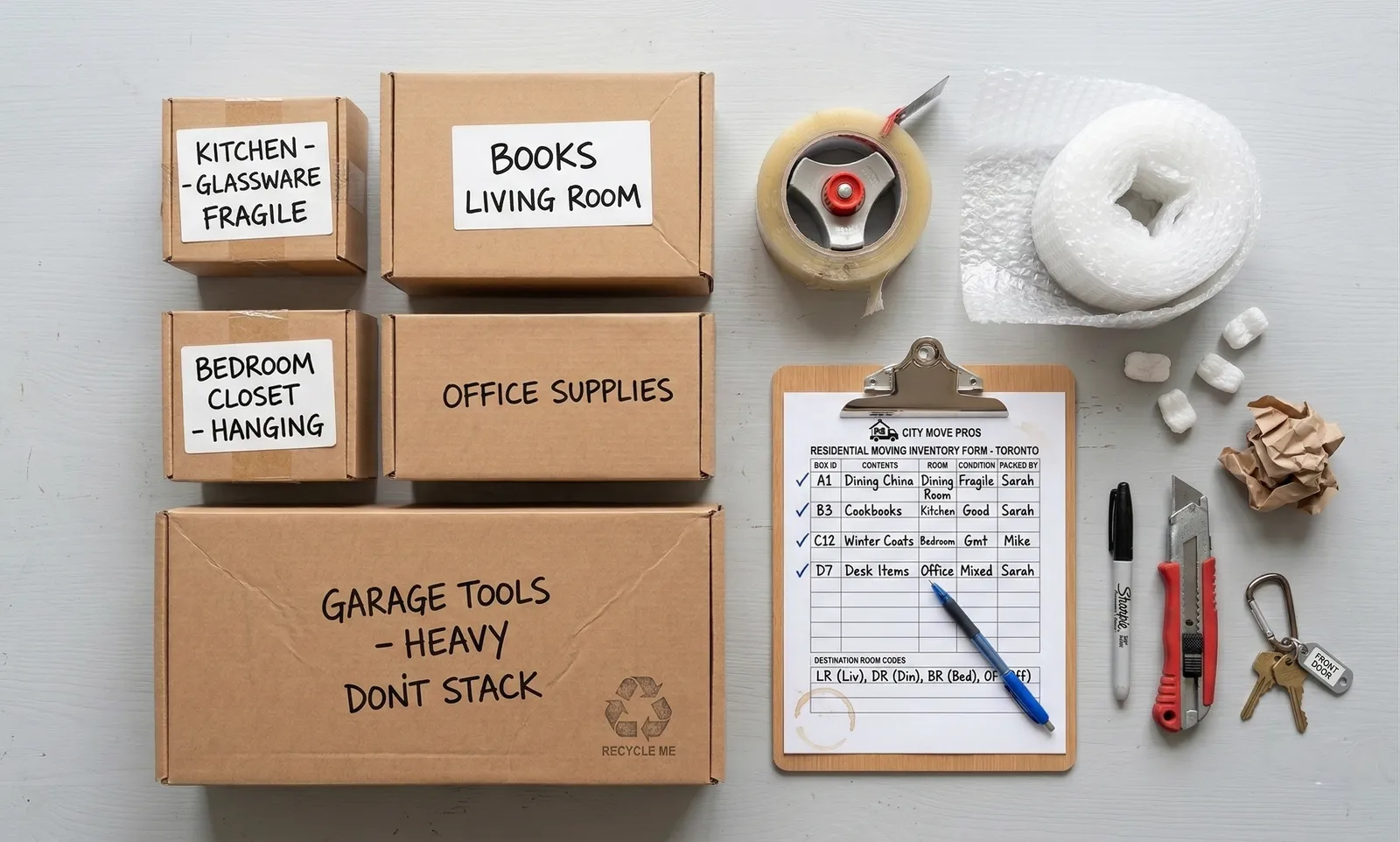
Before you tape a single box, make sure you have everything you need on hand. Running out of tape or packing paper mid-session kills momentum and wastes time. Here is the complete supply list: small boxes for heavy items like books, dishes, and tools; medium boxes for kitchen appliances, toys, and general household items; large boxes for linens, pillows, lampshades, and lightweight bulky items; wardrobe boxes for hanging clothes so they arrive wrinkle-free; packing paper for wrapping fragile items — newspaper works in a pinch but can leave ink stains on light-coloured items; bubble wrap for extra-fragile pieces like crystal, ceramics, and electronics; packing tape and a tape dispenser; a thick permanent marker for labelling; and ziplock bags for small hardware like screws, bolts, and cable connectors.
You can purchase packing supplies from most moving companies, including us, or source free boxes from local Toronto stores. LCBO locations typically have sturdy divided boxes that are perfect for glasses and bottles. Grocery stores like Metro and Loblaws will often set aside boxes if you ask a manager. Just make sure any used boxes are clean, dry, and structurally sound — a box that collapses under the weight of your dishes is worse than no box at all.
The Four-Week Packing Timeline
The key to stress-free packing is starting early and working in phases. Here is our recommended timeline for a standard GTA household move.
Four weeks out, start with the spaces you use least. Guest bedrooms, storage closets, the basement, and seasonal items should be packed first. This includes holiday decorations, sporting equipment you will not use before the move, out-of-season clothing, and anything that has been sitting in storage. This is also the ideal time to declutter — be honest about what you actually use. Donate items in good condition to local charities like the Salvation Army or Habitat for Humanity ReStore, sell valuables on Facebook Marketplace or Kijiji, and recycle or dispose of the rest. The fewer boxes you move, the less you pay and the faster your move goes.
Planning a Move?
Get a free, no-obligation quote in under 2 minutes.
Three weeks out, pack the living room, dining room, and home office. Wrap picture frames and artwork in bubble wrap and stand them upright in boxes — never lay framed glass flat where it can crack under pressure. For bookshelves, pack books spine-down in small boxes and fill gaps with packing paper. Disassemble any furniture that comes apart easily — remove table legs, take apart bookshelves — and put all the hardware in labelled ziplock bags taped directly to the furniture piece.
Two weeks out, tackle the bedrooms. Strip seasonal bedding and pack it in large boxes or vacuum-seal bags. Wardrobe boxes keep hanging clothes clean and wrinkle-free during transit — simply transfer the clothes from your closet rod to the box rod. For folded clothes, dresser drawers can often stay packed as-is if the dresser is not too heavy. Ask your movers whether they prefer drawers in or out — our team typically wraps dressers with the drawers inside to save time.
One week out, pack the kitchen and bathrooms. The kitchen is the most time-consuming room because of fragile items and small parts. Wrap each plate individually in packing paper and stack them vertically in the box — plates stacked vertically are far less likely to crack than plates stacked flat. Nest bowls inside each other with paper between each one. Wrap glasses and mugs individually and place them upside down in divided boxes or boxes with cardboard dividers. Use clean socks, dish towels, or oven mitts as extra cushioning. For pots and pans, nest them together with paper between to prevent scratching. Pack knives in a knife roll or wrap them in thick towels and secure with tape.
The Day Before: Final Items
The day before your move, pack the last of the bathroom essentials, the kitchen items you used for your last meal, and any remaining odds and ends. Strip the beds and pack the sheets. Defrost the freezer if you have not already — a frozen fridge leaks water all over a moving truck. Empty and clean any pet supplies. Charge all your devices overnight so everything has a full battery on moving day.
Commonly Forgotten Items
After thousands of moves, we know exactly which items get left behind most often. Curtain rods and curtains — people strip the curtains but forget the rods. Light fixtures you own — if you installed pendant lights or a ceiling fan, remember to remove them and replace with the originals. Items on top of kitchen cabinets — that serving platter or decorative vase you put up there three years ago and forgot about. The inside of the dishwasher and oven — people sometimes leave dishes in the dishwasher after running a last load, or forget a baking tray in the oven. Garage and shed contents — garden tools, bikes, seasonal tires, and sports equipment. Balcony plants and outdoor furniture — especially in Toronto condos where balcony items are out of sight during winter. And finally, condo storage lockers — if you have a locker in the basement of your building, do not forget it. We have had clients call us days after their move realizing they left an entire locker full of belongings behind.
Labelling and Inventory
Every box should be labelled on at least two sides with its contents and destination room. Use colour-coded tape or stickers — one colour per room — so your movers can place boxes in the correct room at a glance without reading every label. For extra organization, number each box sequentially and keep a master inventory list on your phone. This list is invaluable for three reasons: it helps you confirm that every box made it off the truck, it speeds up unpacking because you know exactly what is in each box, and it serves as documentation for your moving insurance in case anything is damaged during transit.
The Overnight Bag
Pack an overnight bag for each family member containing everything you will need for the first two days in your new home. Include a change of clothes, pajamas, toiletries, medications, phone chargers, a few snacks, and a favourite toy or comfort item for each child. Moving day is exhausting, and the last thing you want is to dig through thirty boxes looking for pajamas at midnight. This bag stays in your car, never on the truck, so you have immediate access when you walk into your new home.
With this checklist and timeline, you are ready to tackle your GTA move with confidence. Packing does not have to be a source of stress — it just needs a system. And if you would rather have the professionals handle it entirely, Fast Track Move offers full packing services where our trained team packs your entire home with professional materials and care. Contact us for a free quote and let us take packing off your plate.